Monday, 27 February 2017

Pig Images With Names

Pig Images With Names
Pig images - A pig is any of the animals in the genus Sus, within the Suidae family of even-toed ungulates. Pigs include the domestic pig and its ancestor, the common Eurasian wild boar (Sus scrofa), along with other species; related creatures outside the genus include the peccary, the babirusa, and the warthog. Pigs, like all suids, are native to the Eurasian and African continents. Juvenile pigs are known as piglets. Pigs are highly social and intelligent animals. With around 1 billion individuals alive at any time, the domesticated pig is one of the most numerous large mammals on the planet. Pigs are omnivores and can consume a wide range of food, similar to humans. Pigs can harbour a range of parasites and diseases that can be transmitted to humans. Because of the similarities between pigs and humans, pigs are used for human medical research. (Wikipedia)
Images Source:
Wikipedia.Org, Pixabay.Com

Pig Images

Wild boar

 
By Valentin Panzirsch - File:Wildschein, Nähe Pulverstampftor.jpg, CC BY-SA 3.0 at, https://commons.wikimedia.org/w/index.php?curid=46902117

Domestic pig

 
By Scott Bauer, USDA - http://www.ars.usda.gov/is/graphics/photos/jun01/k9441-1.htm, Public Domain, https://commons.wikimedia.org/w/index.php?curid=84375

Peccary (domestication)

 
By Taken byfir0002 | flagstaffotos.com.auCanon 20D + Canon 70-200mm f/2.8 L - Own work, GFDL 1.2, https://commons.wikimedia.org/w/index.php?curid=1388968

Truffle hog

By Vayssie Robert Robert Vayssié - Own workGignac Lot France, CC BY-SA 3.0, https://commons.wikimedia.org/w/index.php?curid=14767965

Pot-bellied pig

By Alvesgaspar - Own work (own photo), GFDL, https://commons.wikimedia.org/w/index.php?curid=4565880

Babirusa

By Masteraah at German Wikipedia - Own work, CC BY-SA 2.0 de, https://commons.wikimedia.org/w/index.php?curid=4243310

Red river hog

By Jean-Pol GRANDMONT - Self-photographed, CC BY 3.0, https://commons.wikimedia.org/w/index.php?curid=25601361

Bushpig

By en:User:Cburnett - Own work, CC BY-SA 3.0, https://commons.wikimedia.org/w/index.php?curid=2290723

Pig Beach

By cdorobek - Flickr: 08.2012 Vorobek Bahamas - swimming pigs, CC BY 2.0, https://commons.wikimedia.org/w/index.php?curid=25140064

Images of Pig

Pigs are omnivores, which means that they consume both plants and animals. In the wild, they are foraging animals, primarily eating leaves, grasses, roots, fruits, and flowers. In confinement, pigs are fed mostly corn and soybean meal with a mixture of vitamins and minerals added to the diet. Traditionally they were raised on dairy farms and called "mortgage lifters" due to their ability to use the excess milk as well as whey from cheese and butter making combined with pasture. Older pigs will consume three to five gallons of water per day.

attention: all images contained on this "Pig Images" page does not belong to this blog, the images used for information purposes only. If you are the owner of the image above and don't want the picture shown, please contact us and we'll remove it immediately. Thank you

Pheasant Images Collection

Pheasant Images Collection
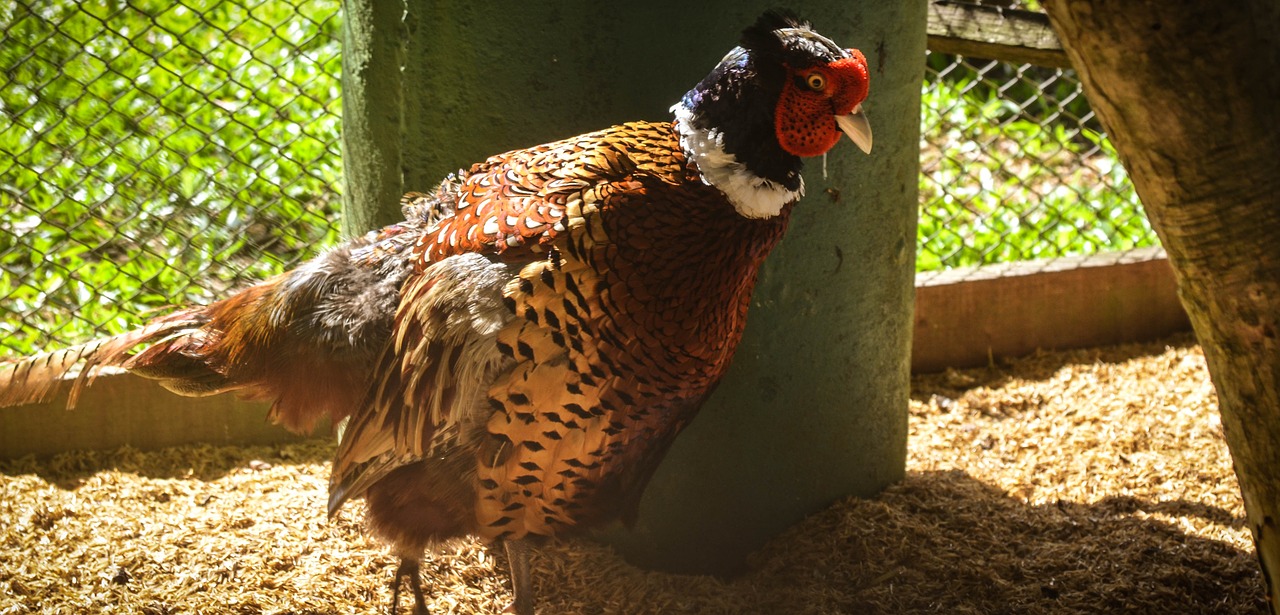
Pheasant images - Pheasants (/ˈfɛzənt/) are birds of several genera within the subfamily Phasianinae, of the family Phasianidae in the order Galliformes. The family's native range is restricted to Asia. (Wikipedia)
Images Source:
Wikipedia.Org, Pixabay.Com

Pheasant Images


Images of Pheasant

Pheasants are characterised by strong sexual dimorphism, males being highly decorated with bright colors and adornments such as wattles. Males are usually larger than females and have longer tails. Males play no part in rearing the young. Pheasants typically eat seeds and some insects. The best-known is the common pheasant, which is widespread throughout the world in introduced feral populations and in farm operations. Various other pheasant species are popular in aviaries, such as the golden pheasant (Chrysolophus pictus).

attention: all images contained on this "Pheasant Images" page does not belong to this blog, the images used for information purposes only. If you are the owner of the image above and don't want the picture shown, please contact us and we'll remove it immediately. Thank you

Sunday, 26 February 2017

Penguin Images With Names

Penguin Images With Names
Penguin images - Penguins (order Sphenisciformes, family Spheniscidae) are a group of aquatic, flightless birds. They live almost exclusively in the Southern Hemisphere, with only one species, the Galapagos penguin, found north of the equator. Highly adapted for life in the water, penguins have countershaded dark and white plumage, and their wings have evolved into flippers. Most penguins feed on krill, fish, squid and other forms of sealife caught while swimming underwater. They spend about half of their lives on land and half in the oceans.
Although almost all penguin species are native to the Southern Hemisphere, they are not found only in cold climates, such as Antarctica. In fact, only a few species of penguin live so far south. Several species are found in the temperate zone, and one species, the Galápagos penguin, lives near the equator. (Wikipedia)
Images Source:
Wikipedia.Org, Pixabay.Com

Penguin Images

Chinstrap penguin
(Pygoscelis antarctica)

By Andrew Shiva / Wikipedia, CC BY-SA 4.0, https://commons.wikimedia.org/w/index.php?curid=46674168


Adélie penguin (Pygoscelis adeliae) feeding young. Like its relatives, a neatly bi-coloured species with a head marking.

By Jerzy Strzelecki - Own work, CC BY 3.0, https://commons.wikimedia.org/w/index.php?curid=3007173


Magellanic penguins (Spheniscus magellanicus). The closed neck collar denotes this species.

By Martin St-Amant (S23678) - Own work, CC BY-SA 3.0, https://commons.wikimedia.org/w/index.php?curid=11860278


Closeup of southern rockhopper penguin (Eudyptes chrysocome)

By Ben Tubby - flickr.com, CC BY 2.0, https://commons.wikimedia.org/w/index.php?curid=3403927

Two king penguins and one gentoo penguin walking on a beach on South Georgia, British overseas territory

By Ben Tubby - flickr.com, CC BY 2.0, https://commons.wikimedia.org/w/index.php?curid=3403927

Images of Penguin

The largest living species is the emperor penguin (Aptenodytes forsteri): on average adults are about 1.1 m (3 ft 7 in) tall and weigh 35 kg (77 lb) or more. The smallest penguin species is the little blue penguin (Eudyptula minor), also known as the fairy penguin, which stands around 40 cm (16 in) tall and weighs 1 kg (2.2 lb). Among extant penguins, larger penguins inhabit colder regions, while smaller penguins are generally found in temperate or even tropical climates (see also Bergmann's rule). Some prehistoric species attained enormous sizes, becoming as tall or as heavy as an adult human. These were not restricted to Antarctic regions; on the contrary, subantarctic regions harboured high diversity, and at least one giant penguin occurred in a region not quite 2,000 km south of the equator 35 mya, in a climate decidedly warmer than today.

attention: all images contained on this "Penguin Images" page does not belong to this blog, the images used for information purposes only. If you are the owner of the image above and don't want the picture shown, please contact us and we'll remove it immediately. Thank you

Pelican Images Collection

Pelican Images Collection
Pelican images - Pelicans are a genus of large water birds that makes up the family Pelecanidae. They are characterised by a long beak and a large throat pouch used for catching prey and draining water from the scooped up contents before swallowing. They have predominantly pale plumage, the exceptions being the brown and Peruvian pelicans. The bills, pouches and bare facial skin of all species become brightly coloured before the breeding season. The eight living pelican species have a patchy global distribution, ranging latitudinally from the tropics to the temperate zone, though they are absent from interior South America as well as from polar regions and the open ocean. (Wikipedia)
Images Source:
Wikipedia.Org, Pixabay.Com

Pelican Images


Images of Pelican

Long thought to be related to frigatebirds, cormorants, tropicbirds, gannets and boobies, pelicans instead are now known to be most closely related to the shoebill and hamerkop, and are placed in the order Pelecaniformes. Ibises, spoonbills, herons and the desolate bitterns have been classified in the same order. Fossil evidence of pelicans dates back to at least 30 million years to the remains of a beak very similar to that of modern species recovered from Oligocene strata in France. They are thought to have evolved in the Old World and spread into the Americas; this is reflected in the relationships within the genus as the eight species divide into Old World and New World lineages.
Pelicans frequent inland and coastal waters where they feed principally on fish, catching them at or near the water surface. They are gregarious birds, travelling in flocks, hunting cooperatively and breeding colonially. Four white-plumaged species tend to nest on the ground, and four brown or grey-plumaged species nest mainly in trees. The relationship between pelicans and people has often been contentious. The birds have been persecuted because of their perceived competition with commercial and recreational fishing. Their populations have fallen through habitat destruction, disturbance and environmental pollution, and three species are of conservation concern. They also have a long history of cultural significance in mythology, and in Christian and heraldic iconography.

attention: all images contained on this "Pelican Images" page does not belong to this blog, the images used for information purposes only. If you are the owner of the image above and don't want the picture shown, please contact us and we'll remove it immediately. Thank you

Peacock Images Beautiful

Peacock Images Beautiful
Peacock images - The peafowl include two Asiatic bird species (the blue or Indian peafowl originally of India and Sri Lanka and the green peafowl of Myanmar, Indochina, and Java) and one African species (the Congo peafowl native only to the Congo Basin) of birds in the genera Pavo and Afropavo of the Phasianidae family, the pheasants and their allies, known for the male's piercing call and, among the Asiatic species, his extravagant eye-spotted tail covert feathers which he displays as part of a courtship ritual. The term peacock is properly reserved for the male; the female is known as a peahen, and the immature offspring are sometimes called peachicks. (Wikipedia)
Images Source:
Wikipedia.Org, Pixabay.Com

Peacock Images


Images of Peacock

The functions of the elaborate iridescent coloration and large "train" of peacocks have been the subject of extensive scientific debate. Charles Darwin suggested they served to attract females, and the showy features of the males had evolved by sexual selection. More recently, Amotz Zahavi proposed in his handicap theory that these features acted as honest signals of the males' fitness, since less fit males would be disadvantaged by the difficulty of surviving with such large and conspicuous structures.

attention: all images contained on this "Peacock Images" page does not belong to this blog, the images used for information purposes only. If you are the owner of the image above and don't want the picture shown, please contact us and we'll remove it immediately. Thank you

Saturday, 25 February 2017

Parrot Images (Cute and Beautiful)

Parrot Images (Cute and Beautiful)
Parrot images - Parrots, also known as psittacines /ˈsɪtəsaɪnz/, are birds of the roughly 393 species in 92 genera that make up the order Psittaciformes, found in most tropical and subtropical regions. The order is subdivided into three superfamilies: the Psittacoidea ("true" parrots), the Cacatuoidea (cockatoos), and the Strigopoidea (New Zealand parrots). Parrots have a generally pantropical distribution with several species inhabiting temperate regions in the Southern Hemisphere, as well. The greatest diversity of parrots is in South America and Australasia. (Wikipedia)
Images Source:
Wikipedia.Org, Pixabay.Com

Parrot Images


Images of Parrot

Characteristic features of parrots include a strong, curved bill, an upright stance, strong legs, and clawed zygodactyl feet. Many parrots are vividly coloured, and some are multi-coloured. Most parrots exhibit little or no sexual dimorphism in the visual spectrum. They form the most variably sized bird order in terms of length. The most important components of most parrots' diets are seeds, nuts, fruit, buds, and other plant material. A few species sometimes eat animals and carrion, while the lories and lorikeets are specialised for feeding on floral nectar and soft fruits. Almost all parrots nest in tree hollows (or nest boxes in captivity), and lay white eggs from which hatch altricial (helpless) young.
Parrots, along with ravens, crows, jays, and magpies, are among the most intelligent birds, and the ability of some species to imitate human voices enhances their popularity as pets. Some parrots are intelligent and talk at the level of a four-to-five year old human. Trapping wild parrots for the pet trade, as well as hunting, habitat loss, and competition from invasive species, has diminished wild populations, with parrots being subjected to more exploitation than any other group of birds. Measures taken to conserve the habitats of some high-profile charismatic species have also protected many of the less charismatic species living in the same ecosystems.

attention: all images contained on this "Parrot Images" page does not belong to this blog, the images used for information purposes only. If you are the owner of the image above and don't want the picture shown, please contact us and we'll remove it immediately. Thank you

Friday, 24 February 2017

Oyster Images Collection

Oyster Images Collection
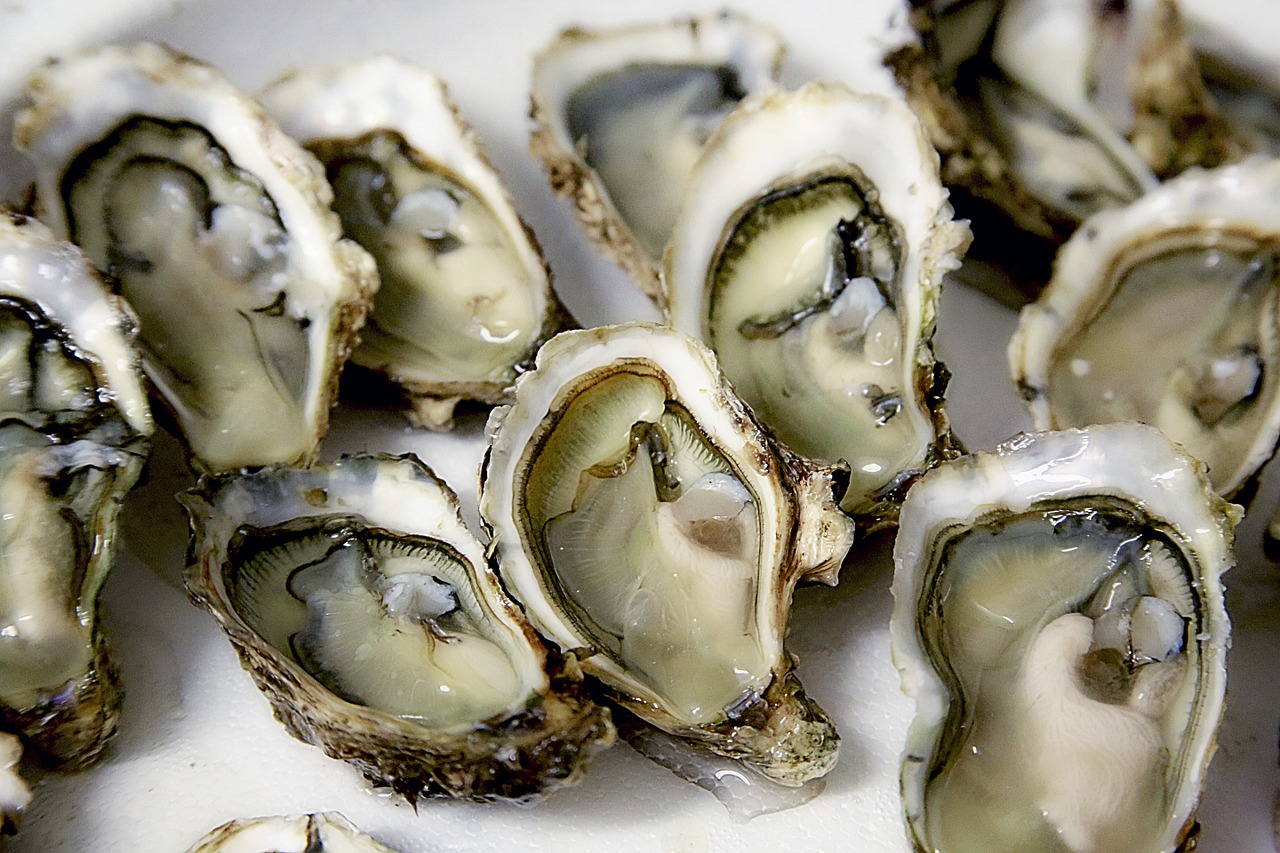
Oyster images - Oyster is the common name for a number of different families of salt-water bivalve molluscs that live in marine or brackish habitats. In some species the valves are highly calcified, and many are somewhat irregular in shape. Many, but not all, oysters are in the superfamily Ostreoidea.
Some kinds of oysters are commonly consumed by humans, cooked or raw, the latter being a delicacy. Some kinds of pearl oysters are harvested for the pearl produced within the mantle. Windowpane oysters are harvested for their translucent shells, which are used to make various kinds of decorative objects. (Wikipedia)

Images Source:
Wikipedia.Org, Pixabay.Com

Oyster Images


Images of Oyster

Oysters are filter feeders, drawing water in over their gills through the beating of cilia. Suspended plankton and particles are trapped in the mucus of a gill, and from there are transported to the mouth, where they are eaten, digested, and expelled as feces or pseudofeces. Oysters feed most actively at temperatures above 10 °C (50 °F). An oyster can filter up to 5 L (1.3 US gal) of water per hour. The Chesapeake Bay's once-flourishing oyster population historically filtered excess nutrients from the estuary's entire water volume every three to four days. Today, that would take nearly a year. Excess sediment, nutrients, and algae can result in the eutrophication of a body of water. Oyster filtration can mitigate these pollutants.
In addition to their gills, oysters can also exchange gases across their mantles, which are lined with many small, thin-walled blood vessels. A small, three-chambered heart, lying under the adductor muscle, pumps colorless blood to all parts of the body. At the same time, two kidneys, located on the underside of the muscle, remove waste products from the blood. Their nervous system includes two pairs of nerve cords and three pairs of ganglia.
While some oysters have two sexes (European oyster and Olympia oyster), their reproductive organs contain both eggs and sperm. Because of this, it is technically possible for an oyster to fertilize its own eggs. The gonads surround the digestive organs, and are made up of sex cells, branching tubules, and connective tissue.
Once the female is fertilized, she discharges millions of eggs into the water. The larvae develop in about six hours and exist suspended in the water column as veliger larvae for two to three weeks before settling on a bed and maturing to sexual adulthood within a year.

attention: all images contained on this "Oyster Images" page does not belong to this blog, the images used for information purposes only. If you are the owner of the image above and don't want the picture shown, please contact us and we'll remove it immediately. Thank you